
10 Best Places to Ski Around the World
There’s nothing quite like the feeling of stepping out into…
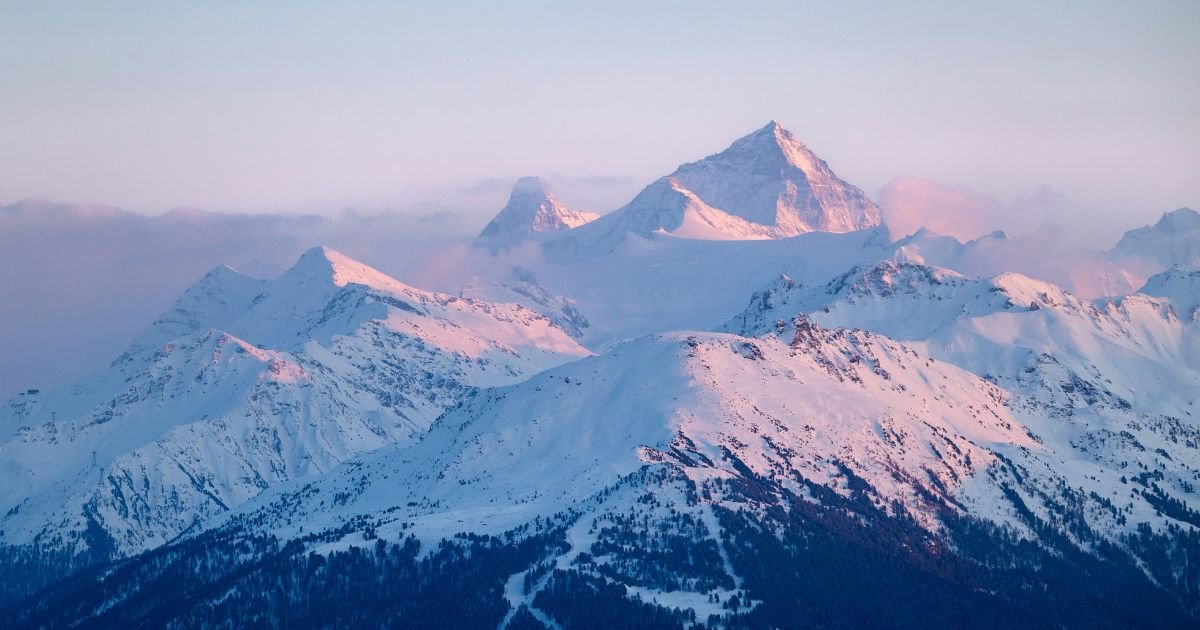
There’s nothing quite like the feeling of stepping out into the crisp winter air, surrounded by snow-covered peaks, and knowing you have an entire mountain waiting for you to explore. Whether you’re chasing that legendary deep powder or just looking for your next big winter getaway, finding the right spot can make all the difference. To help you plan your next great adventure, we’ve put together a guide to the 10 best places to ski around the world. Let’s dive in and find your next favorite mountain!
1. Whistler Blackcomb, Canada: One of the Best Places to Ski for All Levels
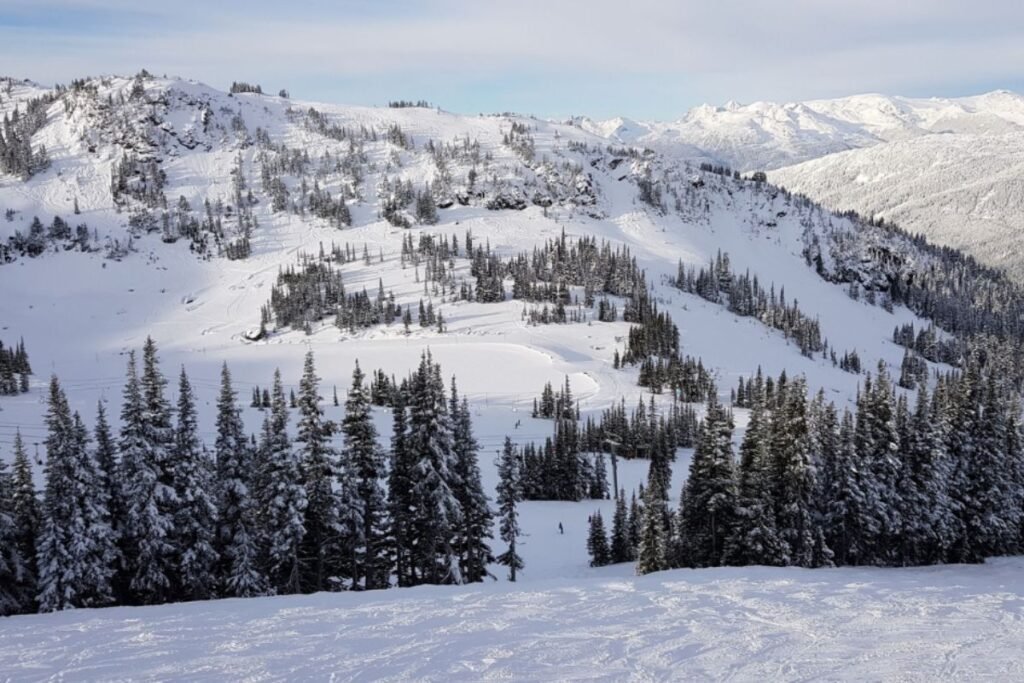
If you could only ski one resort in North America, Whistler Blackcomb would be a strong candidate. It’s widely regarded as the largest ski resort on the continent, with more than 8,000 acres of terrain spread across two enormous mountains, Whistler and Blackcomb. The two are connected by the Peak 2 Peak Gondola, which carries you across a vast valley in minutes and gives you a view you’ll want to photograph.
What makes Whistler special is its range. Beginners can find gentle, rolling runs and a good learning infrastructure. Intermediates can spend days cruising long, groomed trails. Experts can head for steep alpine bowls, chutes, cliffs, and tree skiing that stays interesting even when conditions are tricky. Snowboarders love the terrain parks and natural features across the mountain.
The base village is part of the appeal. It’s walkable, lively, and full of restaurants, bars, shops, and spa options, so your day doesn’t end when the lifts close. Whistler hosted alpine events at the 2010 Winter Olympics, which still shapes its reputation as a world-class destination.
Best for: All abilities, mixed groups, terrain parks, long trips.
Good to know: The resort is big, so give yourself a few days to explore and avoid the busiest weekends if you can.
2. Zermatt, Switzerland: Ski with Views of the Matterhorn
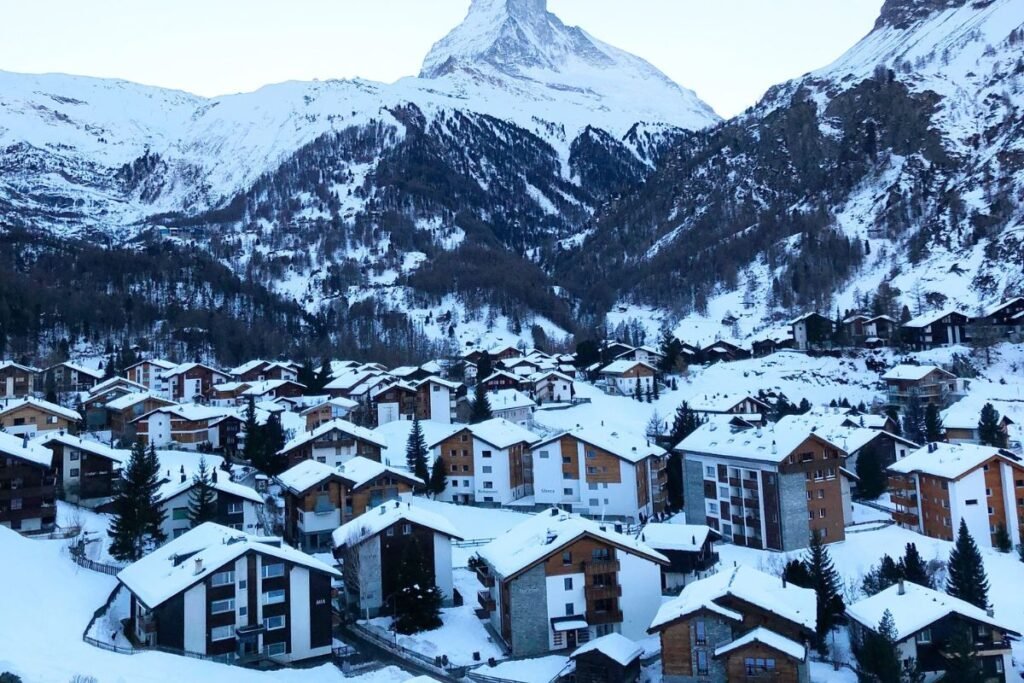
Few mountains in the world are as instantly recognizable as the Matterhorn, and few ski resorts have a backdrop to match. Zermatt sits at its foot in a car-free village in the Swiss Alps, where electric taxis and horse-drawn sleighs replace noisy traffic and the whole place feels like a postcard.
Zermatt’s skiing is high, which gives it a long season and reliable snow. The glacier terrain on the Klein Matterhorn side reaches some of the highest lift-served skiing in Europe, and the resort links with Cervinia in Italy, so you can ski from Switzerland to Italy and back in a single day. Plenty of long cruising runs suit intermediates, and there’s challenging off-piste terrain for advanced skiers who hire a guide.
Zermatt is also known for its mountain restaurants, many of which serve excellent food with terraces facing the Matterhorn. Lunch here is as memorable as the skiing. Switzerland isn’t cheap, so budget accordingly, but the scenery and the quality of the experience are hard to beat.
Best for: Scenery, high-altitude snow, intermediates, a classic Alpine atmosphere.
Good to know: The village is car-free, so you’ll arrive by train or shuttle from nearby Täsch.
3. Niseko, Japan: Discover World-Famous Powder Snow
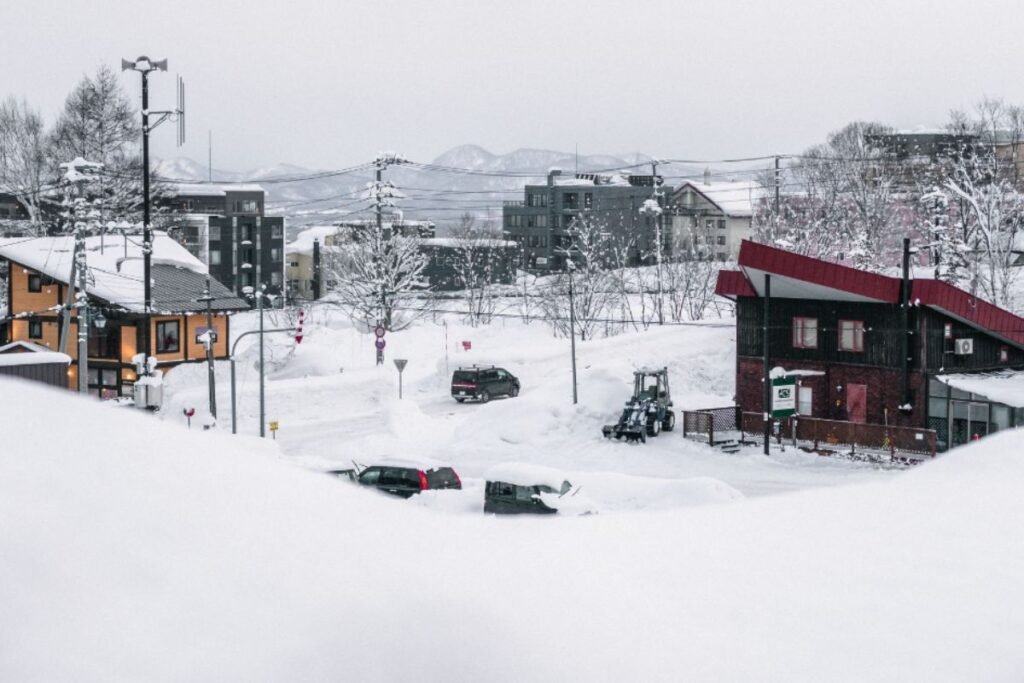
If powder is your dream, Niseko deserves a place on your list. Located on Hokkaido, Japan’s northern island, it’s famous for deep, light, dry snow that skiers affectionately call “Japow.” Cold air sweeping across the Sea of Japan collects moisture and drops it on the mountains, and Niseko gets a great deal of it.
The resort is actually a collection of linked areas on the slopes of Mount Annupuri, including Grand Hirafu, Hanazono, Niseko Village, and Annupuri. Together they offer a mix of groomed runs and tree skiing, plus plenty of off-piste potential for those who ride responsibly. Many areas offer night skiing under floodlights, which is a unique experience in its own right.
Off the slopes, Niseko is a delight. Expect excellent ramen and izakaya restaurants, fresh seafood, and natural hot springs known as onsen, where you can soak while snow falls around you. The village has an international feel, with a strong community of visitors from across the world, but you still feel you’re in Japan.
Best for: Powder lovers, tree skiing, food and culture.
Good to know: The season typically runs from December through March, with the deepest snow usually arriving in January and February. Book early, because it’s popular.
4. Chamonix, France: Enjoy Spectacular Alpine Slopes
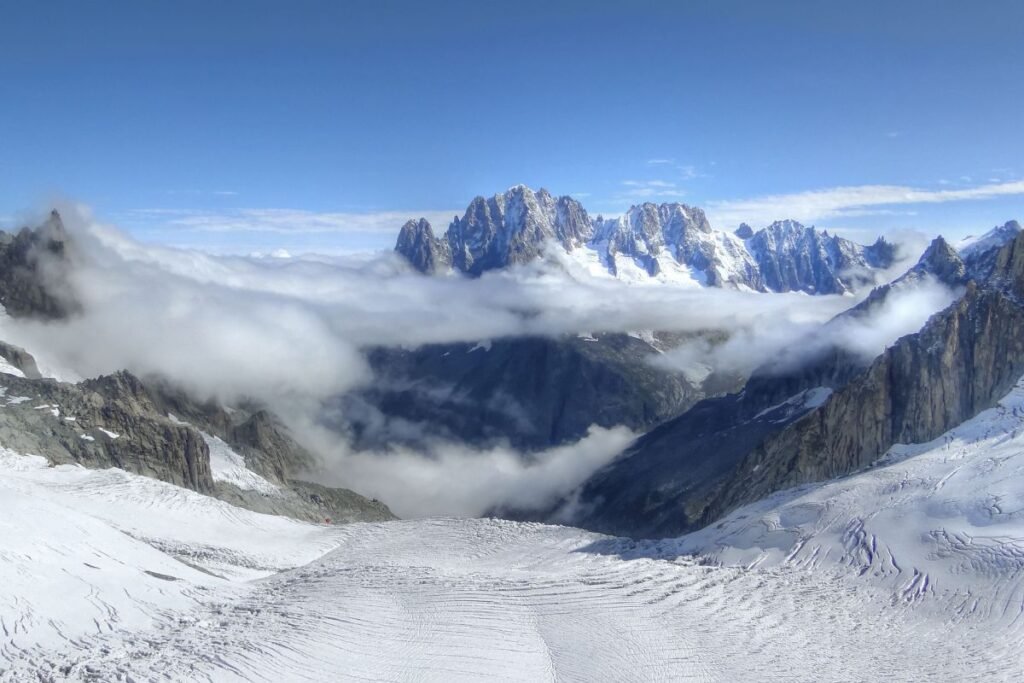
Chamonix is the spiritual home of Alpine adventure. Sitting in the shadow of Mont Blanc, the highest peak in the Alps, the town hosted the first Winter Olympics in 1924 and has been a center for mountaineering and skiing ever since.
Unlike many resorts, Chamonix isn’t one connected ski area. It’s a valley with several separate ski zones, such as Les Grands Montets, Le Brévent, La Flégère, and Les Houches. This setup gives it a serious, adventurous character. The terrain is steep, high, and dramatic, and it attracts advanced skiers, snowboarders, and freeriders from all over the world.
The most famous experience is the Vallée Blanche, a long glacier descent from the Aiguille du Midi cable car, which climbs to a spectacular viewpoint high above the town. It should only be attempted with a qualified guide, because glacier terrain carries real risks, but it’s an unforgettable day for those who are ready.
Chamonix isn’t just for experts. There are beginner and intermediate slopes in the valley, and the town itself has lively restaurants, bars, and shops. But if you love big mountains and big challenges, this is where you’ll feel at home.
Best for: Advanced skiers, adventure seekers, guided off-piste.
Good to know: Use a guide for any off-piste or glacier skiing, and check the weather and avalanche conditions carefully.
5. Aspen, Colorado, USA: Experience a Classic Ski Holiday
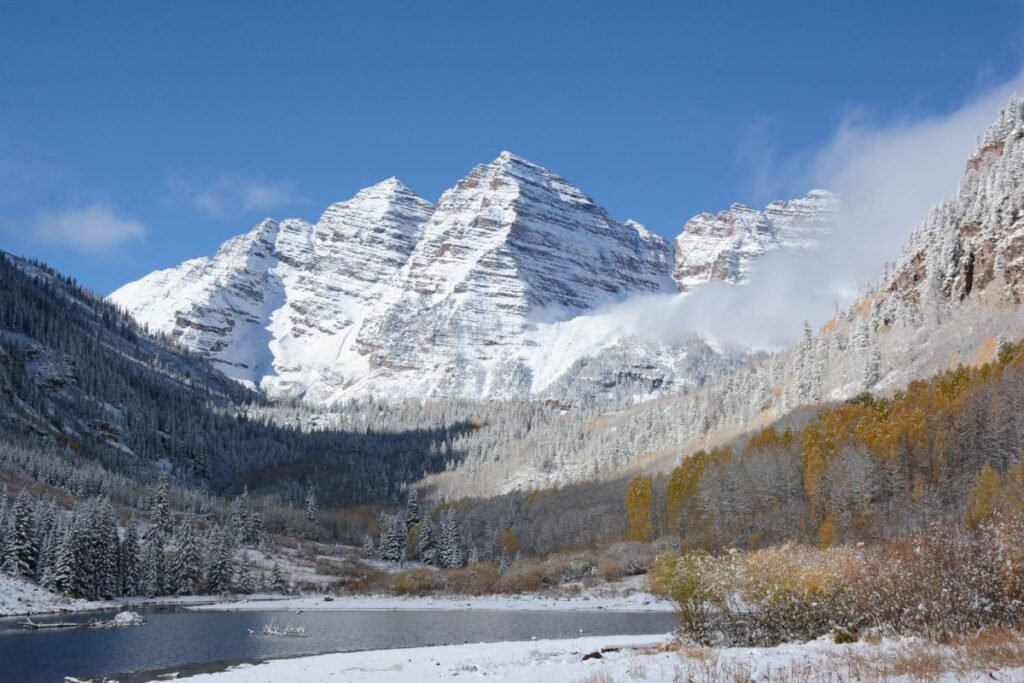
Aspen is one of the most famous ski names in the world, and it earns the reputation. Rather than a single mountain, it’s four: Aspen Mountain, Aspen Highlands, Buttermilk, and Snowmass. Each has its own personality, and together they offer terrain for every ability.
Aspen Mountain, known locally as “Ajax,” rises right from the edge of town and is known for steep, challenging runs. Aspen Highlands has expert terrain, including the famous Highland Bowl, which requires a hike to reach. Buttermilk is gentle and friendly for beginners and has a long history of hosting snowboarding and freestyle events. Snowmass is the largest of the four, with a wide mix of runs for families and intermediates.
The town itself is part of the draw. Aspen is known for upscale dining, art galleries, boutique shopping, and a polished atmosphere that has attracted visitors for decades. If your idea of a ski holiday includes a stylish dinner and a comfortable hotel after a day on the slopes, Aspen delivers. That said, the area’s range of terrain means it works for travelers on a variety of budgets, especially if you stay outside the center or plan carefully.
Best for: Luxury trips, groups with mixed abilities, a classic Rocky Mountain ski holiday.
Good to know: Prices can be high, so book early, and consider the free shuttle system linking the four mountains.
6. Banff, Canada: Ski Among the Rocky Mountains
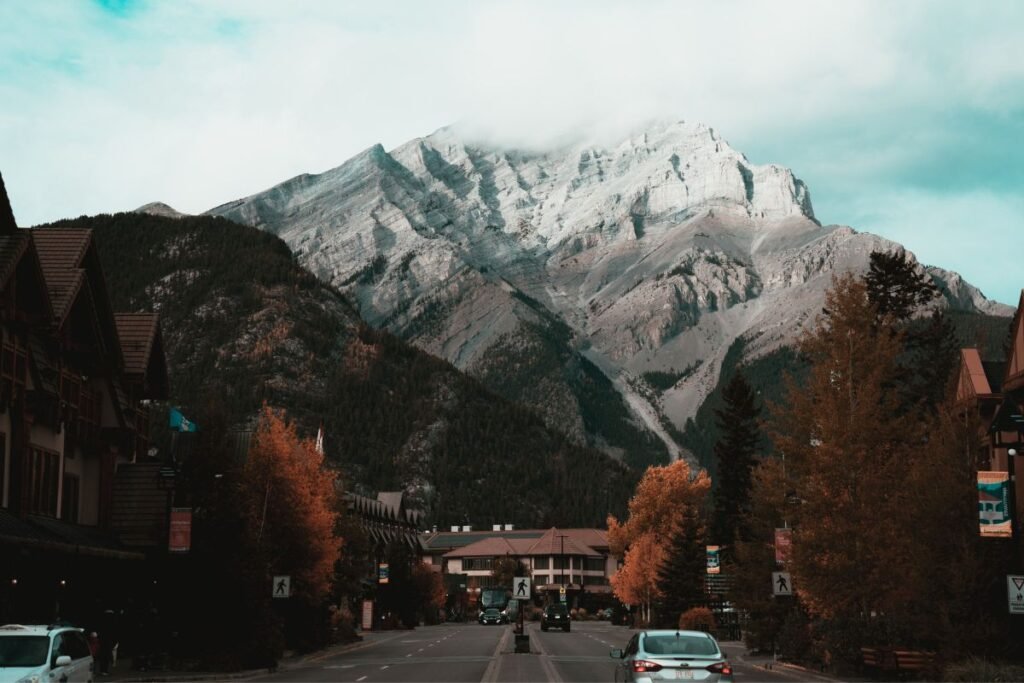
Skiing in Banff means skiing in a national park, surrounded by some of the most dramatic scenery in Canada. Banff is part of the Canadian Rocky Mountain Parks UNESCO World Heritage Site, and the combination of jagged peaks, frozen lakes, and snow-draped forests makes it feel like a winter fairy tale.
Three main resorts, often called the “Big 3,” sit within easy reach of the town: Banff Sunshine Village, Lake Louise Ski Resort, and Mt Norquay. Sunshine Village sits high and tends to get excellent snow. Lake Louise is huge, with wide-open bowls and a mix of beginner to expert runs, and its views across the valley are spectacular. Mt Norquay is smaller and close to town, a good choice for a quick ski day or an evening session.
The Rockies are known for cold, dry snow, which stays light and powdery in the right conditions. Between ski days, you can enjoy hot springs, dog sledding, ice skating on frozen lakes, and wildlife spotting. The town of Banff is a great base, with a wide choice of restaurants and places to stay.
Best for: Scenery, variety, travelers who want to combine skiing with other winter activities.
Good to know: It can be very cold in midwinter, so pack warm layers, and consider a multi-resort pass if you plan to ski more than one area.
7. Cortina d’Ampezzo, Italy: Explore the Beautiful Dolomites
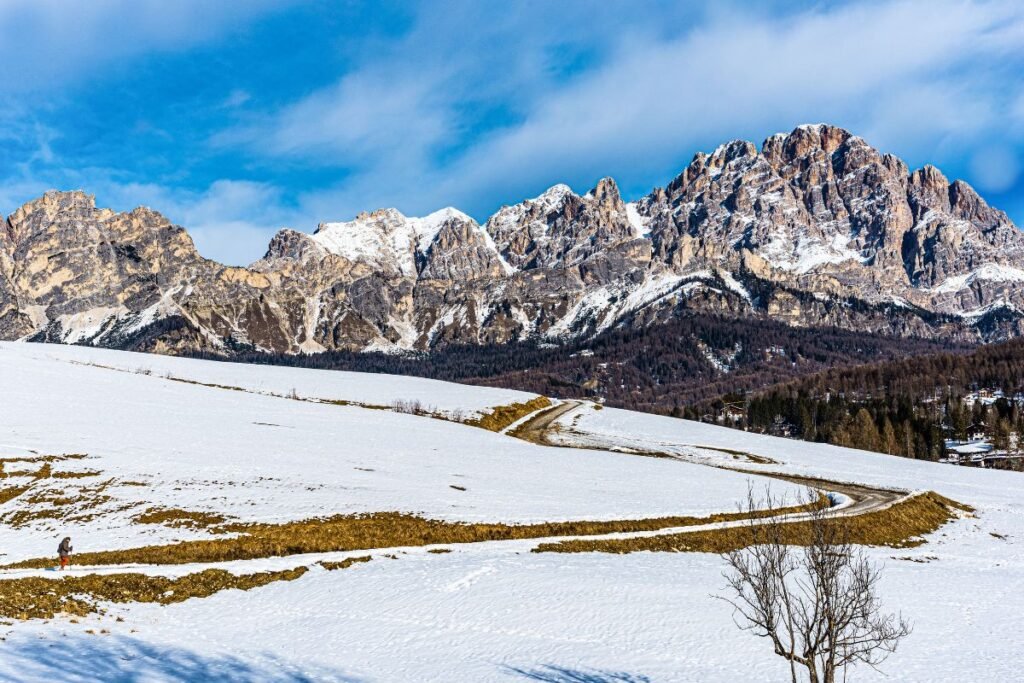
Cortina d’Ampezzo is often called the “Queen of the Dolomites,” and one look at its surroundings explains why. The Dolomites are a UNESCO World Heritage mountain range, famous for pale limestone peaks that glow pink and orange at sunrise and sunset, a phenomenon locals call “enrosadira.”
Cortina has a long Olympic tradition, having hosted the 1956 Winter Olympics and sharing in the 2026 Winter Games, which put the town on the world stage once again. It’s part of the vast Dolomiti Superski network, one of the largest ski pass areas in the world, which links many resorts across the region. With a single pass, you can explore a huge variety of terrain, from easy cruising runs to steeper challenges.
Food is a big part of the experience. Mountain huts, called “rifugi,” serve excellent Italian dishes, from pasta and polenta to local specialties, and lunch is often a highlight of the day. Cortina’s town center is elegant, with fashionable shops, cafés, and a strong Italian atmosphere that mixes sport and style.
Best for: Scenery, intermediates, food lovers, stylish après-ski.
Good to know: Check lift connections and conditions in advance, because the region is large and snowfall can vary, though snowmaking is widespread.
8. Kitzbühel, Austria: Discover Traditional Alpine Skiing
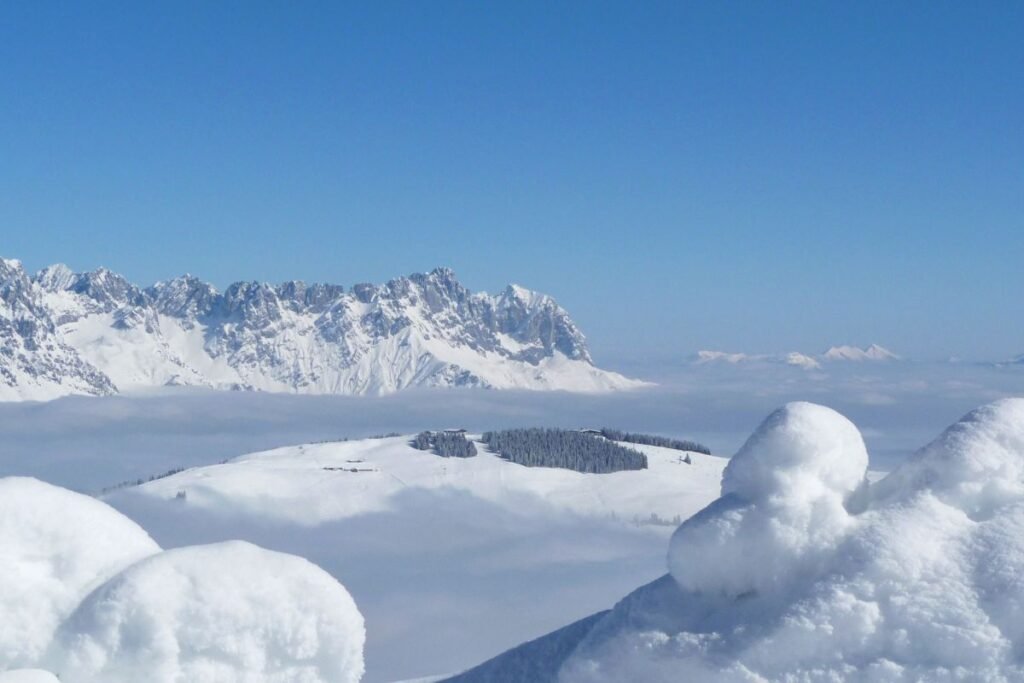
Kitzbühel combines the charm of a medieval Austrian town with some of the most storied skiing in Europe. Its cobbled streets, colorful buildings, and cozy restaurants give it a classic Alpine feel, and the skiing is every bit as good as the setting.
The town is best known for the Hahnenkamm race, held every January on the Streif, one of the most feared downhill courses in World Cup skiing. Watching the race is a bucket-list experience for many fans, though the course itself is for experts only. Most of Kitzbühel’s skiing is far more welcoming, with wide, well-groomed runs that suit beginners and intermediates, and an efficient lift network that makes it easy to cover plenty of ground.
Kitzbühel also has a reputation for excellent après-ski, with traditional taverns and lively bars. It’s a place where you can have a relaxed family trip or a social weekend with friends. Compared with some of the high-altitude resorts on this list, it sits lower, so conditions depend more on the season. Many visitors choose to go in January or February for the best chance of reliable snow.
Best for: Traditional Alpine charm, intermediates, après-ski, race fans.
Good to know: The Hahnenkamm weekend in January draws huge crowds and high prices, so book far ahead or choose a quieter week.
9. Queenstown, New Zealand: Enjoy Skiing with Mountain Views

Queenstown flips the ski calendar on its head. When the northern hemisphere is enjoying summer, the South Island of New Zealand is covered in snow, which makes it the perfect destination for skiers who want a second winter.
The town sits on the shore of Lake Wakatipu, surrounded by jagged mountains known as the Remarkables, which also give their name to one of the nearby ski areas. The Remarkables and Coronet Peak are the closest resorts, with Cardrona and Treble Cone a bit further away. Together they offer a mix of terrain, from gentle learning slopes to challenging chutes, with spectacular views over lakes and peaks.
Queenstown has a reputation as the adventure capital of New Zealand, and it earns it. Between ski days, you can try bungee jumping, jet boating, or hiking, and enjoy local food and wine, including the region’s well-known Central Otago pinot noir. The season usually runs from about June to October, with conditions varying by year.
Best for: Summer-season skiing, adventure travelers, scenery.
Good to know: Flights from the northern hemisphere are long, so plan for jet lag, and consider combining skiing with a wider New Zealand trip.
10. Vail, Colorado, USA: Explore Vast Ski Terrain
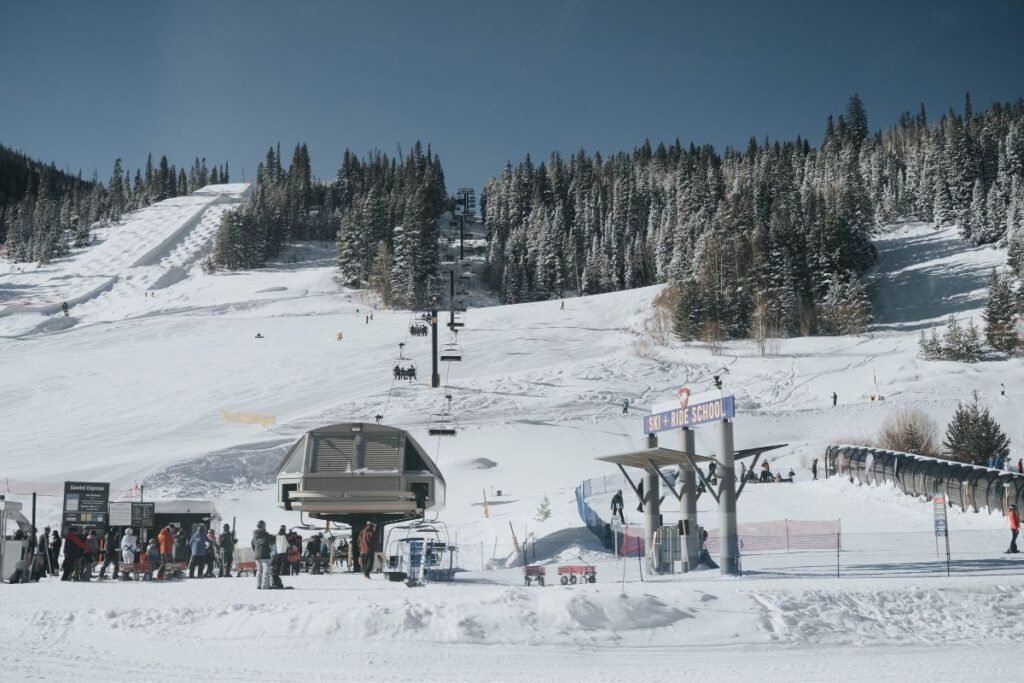
Vail is one of the largest single-mountain ski resorts in the United States, with sprawling terrain that seems to go on forever. It’s best known for its Back Bowls, huge open bowls on the back side of the mountain that offer wide, sweeping skiing when conditions are right, plus a large network of groomed runs on the front side.
Vail was created in the 1960s, and its village was designed with a European Alpine feel, with pedestrian streets, boutique shops, and a cozy mountain atmosphere. The infrastructure is excellent, with a fast and modern lift network and plenty of dining options on and off the mountain. Because it’s so big, it can keep you busy for days without repeating the same run.
The resort suits a broad range of abilities. Beginners will find gentle terrain and strong ski schools, intermediates will love the long cruising runs, and experts can head for steeper chutes and tree skiing. It’s a popular choice for families and groups, and it’s easy to reach from Denver, which is about two hours away by road.
Best for: Big-mountain variety, families, intermediates, a classic Colorado experience.
Good to know: Holiday weeks and weekends can be crowded, so aim for midweek visits when possible.
How to Choose the Best Places to Ski for Your Skill Level
With ten excellent options, how do you decide? The most important factor is your skill level. A resort that’s perfect for an expert might frustrate a beginner, and a gentle family resort might bore an advanced skier within days. Match the mountain to where you are now, and you’ll enjoy every day more.
Beyond ability, consider a few other questions:
- What kind of snow do you love? Deep powder, groomed corduroy, or a mix.
- What’s your budget? Lift tickets, lodging, flights, and food vary widely between regions.
- What do you want off the slopes? Nightlife, spa days, hot springs, scenery, or a quiet escape.
- Who’s traveling with you? Families, couples, and groups of friends often have different priorities.
Best Places to Ski for Beginners
Learning to ski is easier when the mountain is on your side. For beginners, look for resorts with gentle, wide slopes, dedicated learning areas, reliable ski schools, and easy lift access so you’re not stuck on terrain that’s too hard.
Several resorts on this list are great for first-timers. Aspen’s Buttermilk is designed with beginners in mind, with gentle runs and a friendly atmosphere. Whistler Blackcomb offers a good range of green runs and a strong lesson program. Vail has wide, forgiving slopes and well-organized ski schools. In Austria, Kitzbühel’s wide, groomed runs are comfortable for those who are still building confidence, and many parts of the Dolomites around Cortina offer gentle cruising terrain.
A few simple tips will help you progress faster. Take lessons, even if it’s only a half-day, because a good instructor can save you days of frustration. Rent equipment at the resort so you can swap it if it doesn’t feel right. Dress in layers and protect your hands, face, and eyes. And don’t rush, because a relaxed first trip makes you more likely to come back.
Best Places to Ski for Experienced Skiers
If you already ski confidently, you’ll want terrain that challenges you. Chamonix is a top choice, with steep, high, and technical skiing that rewards experience and good judgment. Aspen Highlands and its famous bowl offer a classic expert challenge in the Rockies. Whistler Blackcomb has an enormous amount of steep and varied terrain, from alpine bowls to tree runs. Niseko is a dream for powder lovers who enjoy tree skiing and soft landings, and Zermatt offers high-altitude skiing and off-piste options with the right guide.
Advanced skiing also means taking safety seriously. Check avalanche forecasts and weather conditions every day, carry the right safety equipment if you leave marked runs, and never ski off-piste alone. Hiring a local guide is one of the best investments you can make, because they know the terrain, the conditions, and the hidden gems that visitors rarely find.
When Is the Best Time to Visit These Ski Destinations?
Timing can make or break a ski trip. The right dates mean good snow, manageable crowds, and fair prices, while the wrong ones can mean icy conditions or packed lifts.
Northern hemisphere resorts (Whistler, Zermatt, Niseko, Chamonix, Aspen, Banff, Cortina, Kitzbühel, Vail): The main season runs from roughly December to March, though some high-altitude resorts open earlier and close later. January and February are usually the coldest months, with the most reliable snow, and in Japan and parts of the Rockies, they often bring the best powder. Early March can be a sweet spot, with longer days, milder temperatures, and often good snow depth.
Holiday periods: Christmas, New Year, and February school vacations are the busiest and most expensive times at almost every resort. If you can, avoid them. Midweek visits and early-season or late-season trips are often quieter, cheaper, and more relaxed.
Early season versus late season: Early in the season, in December, snow coverage can be limited at lower resorts, though high-altitude areas like Zermatt tend to be more reliable. Late in the season, in March and April, spring conditions can mean softer snow in the afternoons, which is fun for relaxed cruising but less ideal for powder.
Southern hemisphere (Queenstown): The New Zealand season typically runs from about June to October, with the best conditions often in July and August. It’s a great option if you want to ski during the northern summer.
Conditions vary from year to year, so check snow reports and resort websites as your dates approach, and keep your plans flexible if you can.
Essential Tips for Planning Your Ski Trip
A little planning goes a long way on a ski holiday. These tips will help you avoid common mistakes and make the most of your time on the mountain.
1. Book early. Flights, lodging close to the lifts, and ski school places all fill up fast, especially for holiday weeks. Booking early usually means better choice and better prices.
2. Think about your ski pass. Many regions offer multi-resort passes that can save money and give you more variety. The Dolomiti Superski pass in Italy and various multi-resort passes in North America are examples. Check whether a pass makes sense for your itinerary before you buy day tickets.
3. Choose the right location to stay. Staying close to the lifts saves time and energy, but it can cost more. Staying a little further out, with a shuttle or ski bus, can save money. Look at the resort map and the transport options before you book.
4. Pack smart. Layers are the key: a moisture-wicking base layer, an insulating middle layer, and a waterproof outer shell. Good goggles, warm gloves, quality socks, and a helmet make a bigger difference to your comfort than almost any other piece of gear. Bring sunscreen and lip balm too, because the sun at altitude is strong.
5. Rent or bring your own. Beginners and occasional skiers are usually better off renting, which also saves the hassle of carrying equipment on planes. If you ski regularly, consider buying your own boots, since the fit matters most.
6. Get fit before you go. A few weeks of leg, core, and cardio exercises can reduce fatigue and lower your risk of injury. Squats, lunges, and planks are all useful.
7. Buy travel insurance. Choose a policy that covers winter sports, medical treatment, and trip interruptions. If you plan to ski off-piste, check that your policy includes it.
8. Respect the mountain. Follow the skier’s code, stay within your ability, check weather and avalanche conditions, and hire a guide for off-piste adventures. Mountains can change quickly, and good judgment keeps everyone safe.
9. Pace yourself. Altitude, cold, and long days can be tiring. Drink plenty of water, take breaks, and don’t be afraid to stop early. A rested skier is a safer and happier skier.
10. Leave room for the rest of the trip. Some of the best memories come from what happens off the slopes, such as the local food, a soak in a hot spring, a walk through the village, or a long dinner with friends. Don’t pack every minute of your itinerary.
Conclusion: Which of These Best Places to Ski Will You Visit?
From the sprawling slopes of Whistler Blackcomb and Vail to the deep powder of Niseko, the dramatic peaks of Chamonix and the Dolomites, and the Matterhorn views at Zermatt, the best places to ski offer a wide range of experiences. Some are perfect for beginners, some are made for experts, and some, like Queenstown, let you enjoy a second winter when everyone else is in summer.
The right choice depends on you: your ability, your budget, the kind of snow you love, and the memories you want to make. Whatever you choose, plan ahead, travel safely, and give yourself time to enjoy the mountains.
So, which of these destinations is calling you? Tell us in the comments where you’re heading next, and share your own favorite place to ski. We’d love to hear about it.
Frequently Asked Questions About the Best Places to Ski
What are the best places to ski in the world?
Top destinations include Whistler Blackcomb in Canada, Zermatt in Switzerland, Niseko in Japan, Chamonix in France, Aspen and Vail in Colorado, Banff in Canada, Cortina d’Ampezzo in Italy, Kitzbühel in Austria, and Queenstown in New Zealand. The best choice depends on your skill level, budget, and the kind of experience you want.
Which is the best place to ski for beginners?
Look for gentle slopes, dedicated learning areas, and good ski schools. Aspen’s Buttermilk, Whistler Blackcomb, Vail, Kitzbühel, and the beginner-friendly areas around Cortina in the Dolomites are all popular choices.
Where is the best place to ski for powder?
Niseko in Hokkaido, Japan, is famous for light, dry powder. The Canadian and US Rockies, including Banff and Aspen, also get excellent snow, especially in midwinter.
Which ski resort is best for experts?
Chamonix is a favorite for advanced skiers because of its steep, high, and technical terrain. Aspen Highlands, Whistler Blackcomb, and Zermatt also offer challenging skiing. For off-piste skiing, hire a local guide.
When is the best time to go skiing?
In the northern hemisphere, the main season runs from roughly December to March. January and February often have the most reliable snow, while early March can offer longer days and milder weather. In New Zealand, the season usually runs from about June to October.
Where can I ski in summer?
Queenstown, New Zealand, is a popular choice, since its ski season falls during the northern summer. Conditions vary from year to year, so check snow reports before you book.
Is it cheaper to ski in Europe or North America?
It depends on the resort, the season, and how you travel. Prices for lift tickets, lodging, and food vary widely in both regions, and holiday weeks are the most expensive everywhere. Traveling midweek or outside peak periods, and booking early, can save you money.
Should I rent or buy ski equipment?
Beginners and occasional skiers usually do better renting, which also saves the hassle of flying with gear. If you ski often, buying your own boots is a good first step, since fit matters most.
Do I need travel insurance for a ski trip?
It’s strongly recommended. Choose a policy that covers winter sports, medical treatment, and trip interruptions, and check whether it includes off-piste skiing if you plan to leave marked runs.