
The Northern Lights: When and Where to See the Aurora Borealis
Discover The Northern Lights with this beginner’s guide to when and where you can see the aurora borealis, plus tips for planning your trip with confidence.
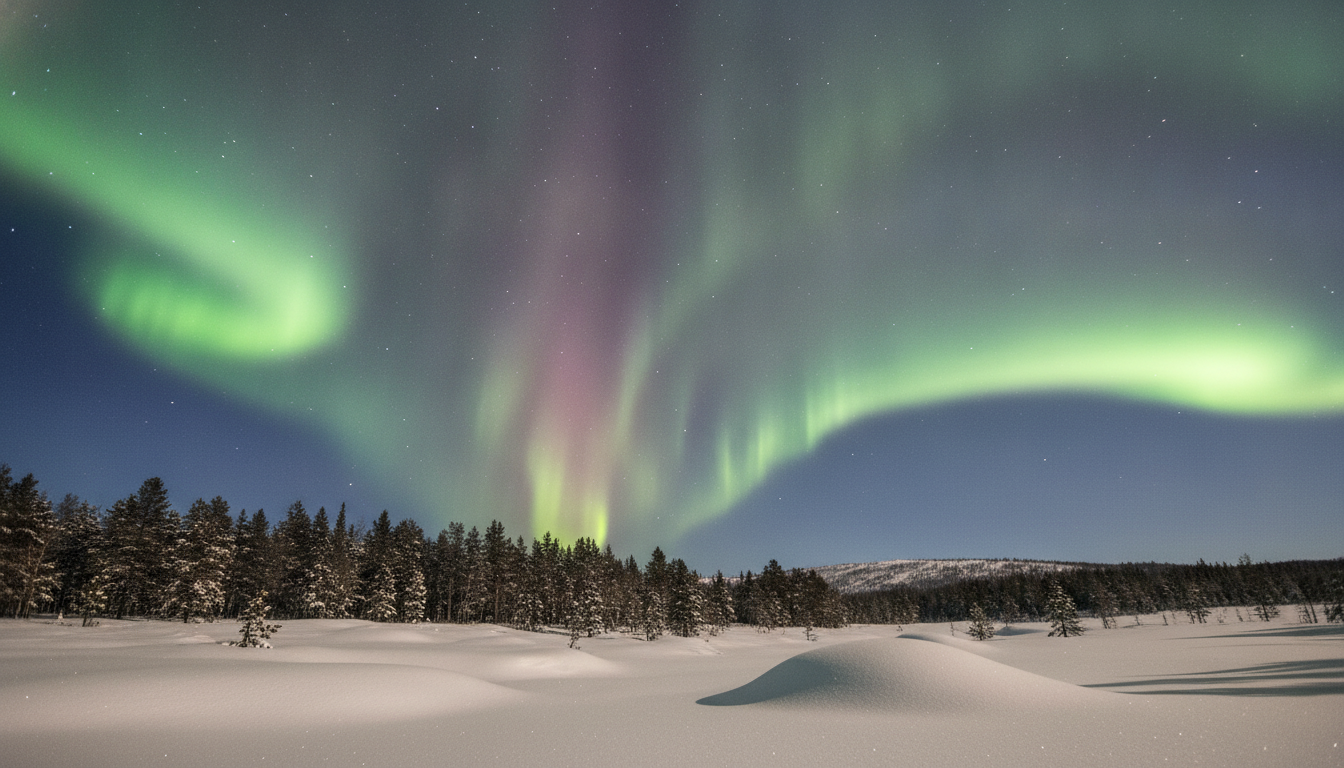
Table of Contents
The Northern Lights, also called the aurora borealis, are glowing displays that appear in the night sky when solar activity interacts with Earth’s atmosphere. This guide explains when and where to see northern lights, how viewing conditions affect your chances, and which destinations offer the best place to experience this natural phenomenon.
You can see the Northern Lights in Alaska, northern Canada, Iceland, Norway, Sweden, Finland, and northern Russia. The ideal season varies by latitude, but many destinations offer suitable darkness from late August or September through early April. October, November, and March are often practical months for a trip because nights are long and travel conditions may be manageable; no month guarantees a display. Darkness, clear weather, low light pollution, and geomagnetic activity matter more than a specific date or time of year.
Choose a location far from artificial lights with an unobstructed view of the sky. Check the cloud forecast and aurora forecast before heading outside, then be prepared to wait. The lights may appear as faint patches, bright arcs, streamers, or rippling bands, sometimes with little warning. A dark night and clear northern horizon can make even a brief display easier to see, while clouds or city glow can hide strong activity. Plan several nights of viewing whenever possible.
Introduction to The Northern Lights
An aurora is a natural light display produced when energized particles interact with gases in a planet’s upper atmosphere. The aurora borealis, commonly called the northern lights, usually appears in shifting forms, including faint patches, clouds, arcs, streamers, and moving curtains. Its colors and brightness can change quickly as solar activity changes.
The Sun’s activity follows an approximately 11-year cycle, which can influence the frequency and strength of auroras, but it does not guarantee that a particular location will see the northern lights in any given year. Auroras generally form in oval zones around the magnetic poles. During strong geomagnetic storms, these zones can expand toward lower latitudes. Oxygen in the atmosphere commonly produces green and sometimes red colors, while nitrogen can contribute blue and purple tones. The exact color also depends on altitude and particle energy.
The aurora borealis is most often observed in the northern hemisphere, especially near the Arctic regions. Its southern counterpart, the aurora australis, occurs around the opposite magnetic pole. The Southern Lights can be seen from Tasmania, southern New Zealand, Antarctica, and parts of southern Australia. Both aurora displays are the same atmospheric phenomenon viewed from different hemispheres, and each can transform a dark sky into a remarkable natural light show.
Unraveling the Science Behind the Aurora Borealis
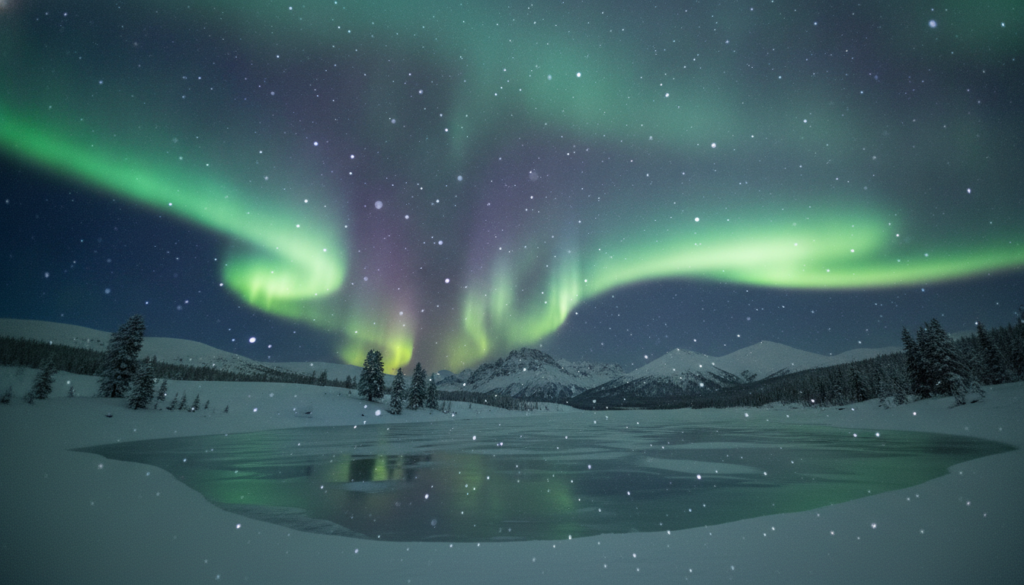
The science behind the aurora borealis begins with the Sun. The Sun releases a continuous flow of charged particles called solar wind into space. When this stream reaches Earth, Earth’s magnetic field deflects most of the particles and helps guide some toward the polar regions. This pattern occurs because the magnetic field is strongest around the magnetic poles, where field lines direct incoming particles into the upper atmosphere.
As charged particles enter the upper atmosphere, electrons collide with gases in Earth’s atmosphere, including oxygen and nitrogen. These collisions temporarily energize the gas atoms. When the atoms return to their normal state, they release photons, producing the visible light known as an aurora. The altitude and energy of the collisions affect the colors: oxygen commonly creates green and red emissions, while nitrogen can contribute blue or purple tones. The same magnetic field that protects Earth also shapes the auroral displays we see.
Solar wind conditions, geomagnetic storms, and the Kp index describe related but different aspects of aurora activity. Strong solar storms can disturb Earth’s magnetic field and expand the auroral oval toward lower latitudes. A higher Kp value generally means that auroras may be visible farther from the poles, but it does not guarantee a display at a specific location. Scientists use satellites and ground-based instruments to measure solar wind, magnetic-field changes, and activity. These observations support short-term forecasts, but no forecast can predict the exact time, brightness, or form of every aurora. Clear skies and darkness are still necessary to see the phenomenon.
Best Time and Optimal Conditions for Aurora Viewing
The best time to see the northern lights depends on darkness, location, and solar activity rather than on one universally perfect month. Many high-latitude destinations offer aurora viewing from late August or September through early April, when nights are long enough. October, November, and March can provide a useful balance of darkness and travel conditions, but the best months vary by latitude. The best time of night is usually during local astronomical darkness, often near midnight, although the exact window changes with the season, longitude, and current activity.
Weather and sky conditions can determine whether you see the northern lights. Clouds, moonlight, light pollution, and trees or mountains blocking the horizon can hide even strong auroras. Use this practical checklist:
- Check NOAA’s current three-day aurora forecast and short-term, approximately 30-minute forecast before leaving.
- Choose a dark rural place or an International Dark Sky location with an open view toward the northern sky.
- Compare cloud and weather forecasts with the aurora forecast; clear skies are essential for viewing.
- Be patient and plan several nights, because activity can rise and fade quickly and displays may last only minutes or several hours.
- Allow your eyes about 20–30 minutes to adjust to darkness, and avoid bright phone screens while you wait.
Headlands International Dark Sky Park, about two miles west of Mackinaw City, is one example of a darker viewing location, but local access and conditions should be checked before visiting. In Colorado, auroras remain uncommon and generally require strong solar storms, a dark site, and clear weather. A high Kp value or active magnetic field can improve your chances, but it cannot guarantee that you will see an aurora or its colors.
Essential Tips for Photographing the Aurora Borealis
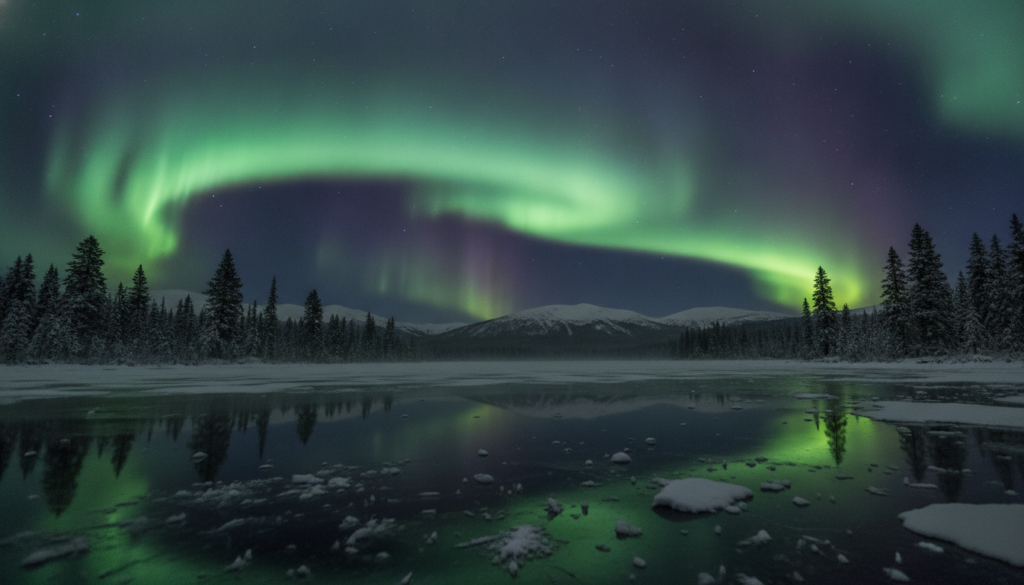
Photographing the aurora borealis requires patience, stable support, and settings that match the display. Whether you use a dedicated camera or your phone, remember that the colors recorded by a sensor may appear brighter than they look during live viewing.
Jeremiah Baumann, a Michigan Tech alumnus, has reportedly chased auroras since 2006 and recommends a camera and tripod as essential equipment. Treat these settings as starting points: a fast display may need a five- to 10-second exposure, while slower lights may allow 15–30 seconds. Adjust the ISO, aperture, and shutter speed for the display speed, lens, camera sensor, and available light.
- Use a stable tripod and a timer or remote shutter to prevent camera movement.
- Set manual focus near infinity, then check sharpness on a distant light or test image.
- Start with an ISO of 800–3200 and the widest practical aperture, then adjust exposure.
- For moving displays, use shorter exposures to preserve shape; slower lights can tolerate longer exposures.
- Shoot RAW when possible. On a tripod, disable image stabilization if your camera maker recommends it.
Cold weather drains batteries, so carry spares in an inner pocket. A phone tripod and night mode can capture bright northern lights, while manual controls in apps such as Adobe Lightroom Mobile may help on supported iOS and Android devices. Faint auroras may be difficult for a phone to record. Keep equipment sealed while moving indoors so condensation does not form, and protect the lens from frost.
Planning Your Trip to See The Northern Lights
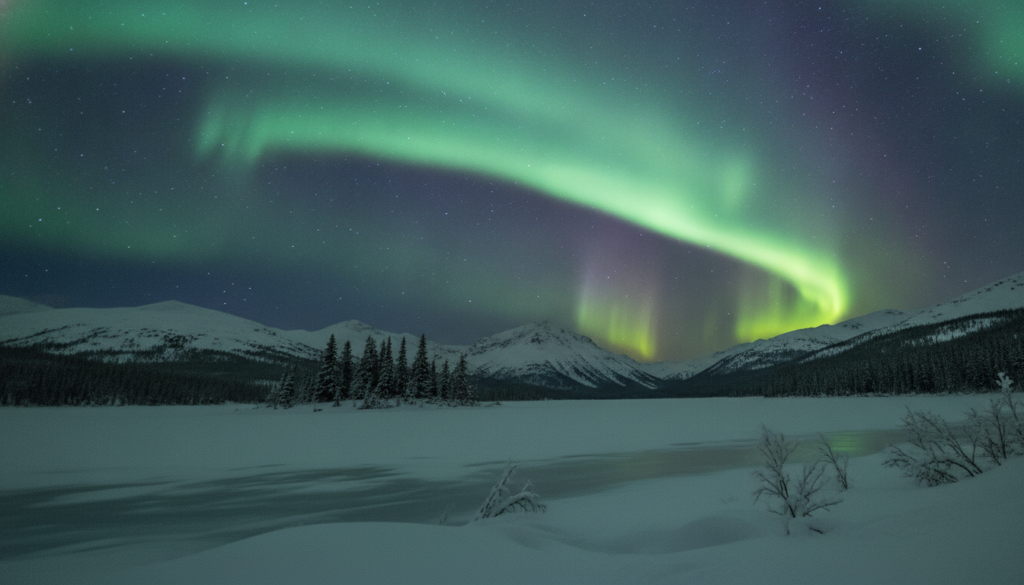
To see northern lights reliably, choose a destination within or near the auroral oval, where the aurora borealis appears most often in the northern hemisphere. Popular places include Fairbanks and other areas of northern Alaska; Yellowknife, Whitehorse, and northern Canada; Reykjavik and rural Iceland; Tromsø, Alta, and Svalbard in Norway; Abisko and Kiruna in Sweden; and Rovaniemi, Inari, and Kakslauttanen in Finland. Dark locations in northern Scotland can also produce sightings when geomagnetic activity is strong. These destinations differ in weather, transport, accommodation, and accessibility, so compare local conditions before booking.
To see northern lights outside a city, prioritize clear weather, low light pollution, and an unobstructed horizon. Staying for at least three nights improves your chances because cloud cover and aurora activity can change quickly. A local tour may provide transportation, a guide, heated shelter, and accessible viewing areas, while a rental car can offer more flexibility in rural places. If you drive, check winter road conditions, fuel availability, insurance requirements, and local safety advice. Choose accommodation with easy nighttime access, and tell tour operators about mobility or accessibility needs in advance.
Monitor the solar wind and use NOAA’s current three-day forecast and short-term, approximately 30-minute forecast when deciding where to go. The Kp-index measures disturbances in Earth’s magnetic field on a scale from 0 to 9. A higher reading can indicate that the auroral oval may expand toward lower latitudes, but it is not a guarantee that you will see the lights. Strong solar storms can develop quickly, and some displays may become visible with only about 30 minutes of notice. The Sun’s activity varies across an approximately 11-year cycle, but a favorable year does not replace clear skies or darkness.
Pack insulated layers, waterproof footwear, gloves, snacks, water, and spare batteries for long waits. Bring a headlamp with a red-light mode, a charged phone, and offline maps. Check weather, road, and local safety information before leaving, then allow enough time to return safely. Compare the aurora and weather forecasts, select a dark place, and book a flexible stay of several nights rather than relying on one forecast or one viewing time. With thoughtful planning, you can see northern lights while keeping comfort, safety, and practical access in account.
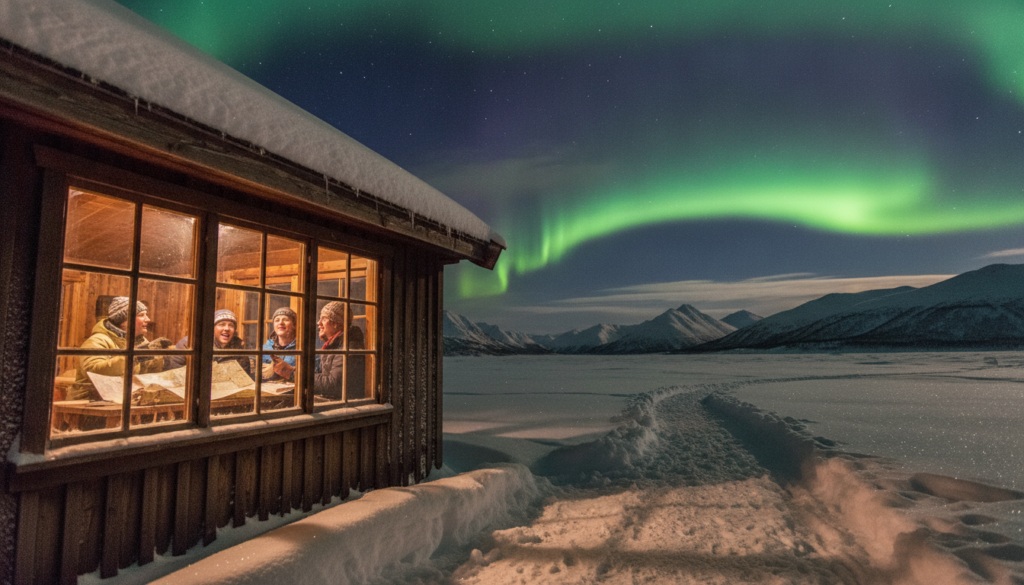
Local Insights and Community Festivals
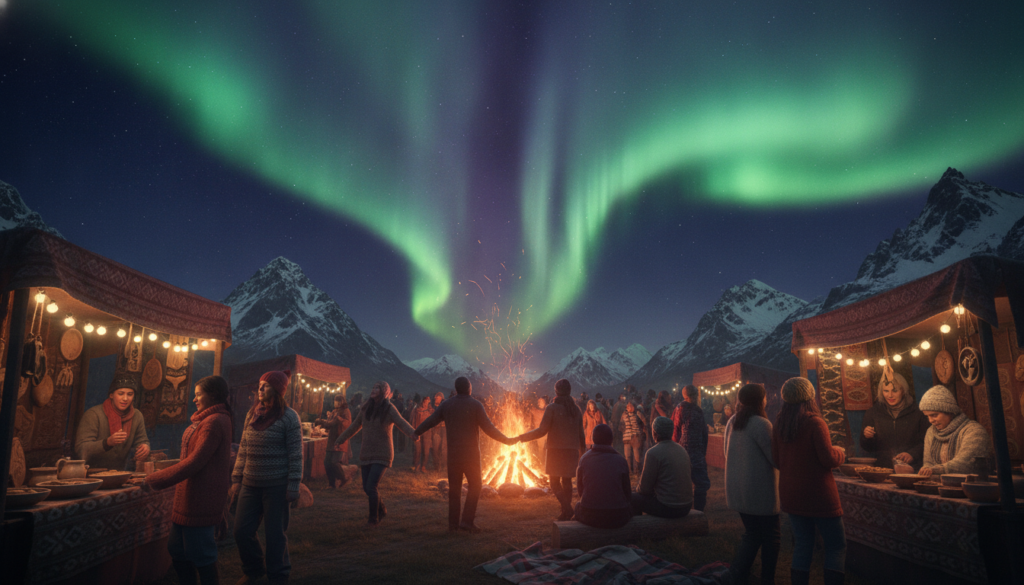
Community events can add local context to an aurora trip, but festival schedules and viewing conditions change from year to year. Check the official event page before traveling, and do not assume that a festival guarantees visible auroras. A clear sky, darkness, and geomagnetic activity still determine whether you see northern lights.
Aurora Borealis Festival Highlights and Events
In Aurora, Colorado, verify whether the annual festival is currently scheduled before relying on its program. Past activities have included:
- Illuminated installations inspired by aurora colors.
- Live entertainment and community performances.
- Hands-on science activities about the aurora phenomenon.
- A Global Gift Bazaar featuring local artisans.
- A silent disco and other evening events.
Local Viewing Spots and Expert Recommendations
For local viewing, confirm access, parking, weather, safety rules, and darkness at each place. Michigan options include:
- Breakers Beach and McLain State Park, which may offer darker views away from city lights.
- Headlands International Dark Sky Park, about two miles west of Mackinaw City.
- Lake Superior locations such as Brimley, Whitefish Point, and Pictured Rocks.
- Eagle Harbor and Brockway Mountain, where an open horizon can improve viewing.
- Marquette and Big Bay, provided conditions and local access are suitable.
For the strongest chance to see northern lights, consider Fairbanks, Yellowknife, Whitehorse, rural Iceland, Tromsø, Alta, Abisko, Kiruna, Rovaniemi, Inari, and northern Scotland. Alaska and northern Canada often provide direct access to the auroral oval, while Iceland, Norway, Sweden, and Finland combine dark viewing areas with established tourism infrastructure. Plan several nights and check an official forecast before choosing a viewing site.
Conclusion
The Northern Lights are a natural phenomenon shaped by solar activity, particles, gases, and Earth’s magnetic field. To see northern lights, choose a dark place with a clear sky, monitor the forecast, and allow several nights rather than depending on one display.
The viewing season often runs from late August or September through early April, depending on latitude and darkness. October, November, and March may be useful travel months, but no single month guarantees auroras. Cloud cover, light pollution, weather, and activity all affect what you see.
Check an official forecast and Kp-index, dress warmly, bring spare batteries, and use a tripod for photography. Book flexible travel when possible, then select a safe viewing site with an open horizon. These steps improve your chances of seeing bright lights in the sky.